Check Music Permissions Before Reusing a Download
Being able to save an audio file is not the same as having permission to publish it in another video, stream, presentation, or product. Before reusing music found through Y2Mate, identify the actual recording and check the permission relevant to your intended use. A downloader can help with a file workflow; it does not supply a license for the song or recording.
Start this check before building a project around the track. Discovering an unclear license after editing is more disruptive than resolving it while choosing music. This is a practical information checklist, not legal advice or a conclusion about any particular country's copyright rules.
Write down what you intend to do
A useful permission question is specific. Will the music remain a personal file, accompany a public video, appear in a paid advertisement, or be distributed in a downloadable project? Those are different uses. A vague statement that a song is free does not answer all of them.
Describe the intended platform, audience, whether the project is commercial, and whether you plan to edit the music. Include how much of the recording you want to use. This does not determine permission by itself, but it gives you a clear request when reading a license or contacting the relevant rights holder.
For example, a creator may be willing to allow one track in a classroom presentation while offering different terms for a promotional campaign. Do not infer permission for the second use from a message about the first. Keep the scope of any agreement connected to the actual project.
Identify the work and the source carefully
Music can involve more than one relevant contribution, such as a composition and a particular recording. A familiar song title or a channel that reposted it does not establish who can authorize your intended reuse. Check that the person or organization offering permission has authority over the material involved.
Look for reliable source information and compare the exact version. A live performance, cover, remix, or instrumental may have different circumstances from the recording you originally searched for. The live-recording checklist helps you identify those differences before deciding which file to save.
Keep the source title and identifying details in your project notes. If you later need to review an agreement, the notes should identify the recording, not simply say background music. A download filename generated by the browser is not a substitute for a source record.
Read the actual license instead of a reassuring label
YouTube distinguishes its standard license from a Creative Commons Attribution license. A Creative Commons label does not mean that conditions can be ignored. Check the applicable license, including attribution requirements, and whether the uploader can license the content in the first place.
Do not rely only on phrases such as copyright free, no copyright, or safe for creators in a title. They may omit important conditions or describe a use different from yours. Read the specific permission attached to the actual work and resolve inconsistencies before using it in a public project.
Credit alone is not a universal replacement for permission. Nor do a purchase, a subscription, a popular upload, or the absence of a visible warning settle every reuse question. Treat each as a fact to examine, not an automatic license for your intended publication.
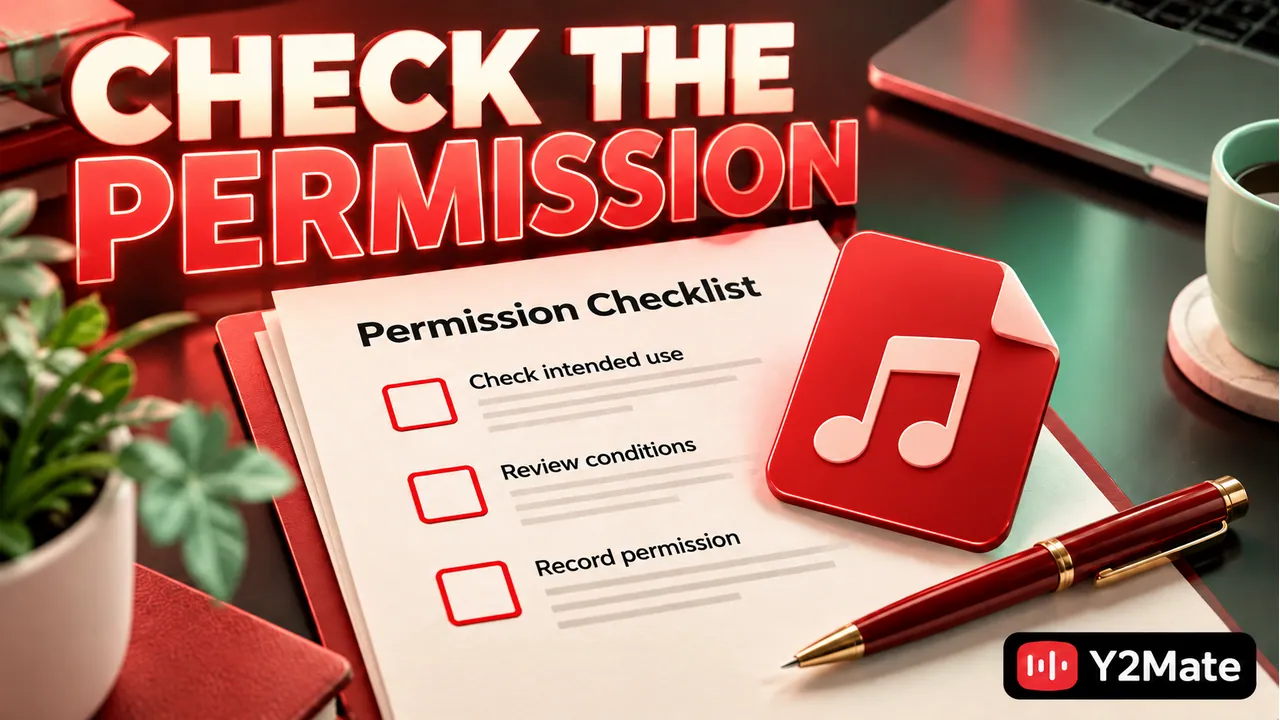
- Identify the exact work and recording, not just the song title.
- Read the applicable permission or license and note its scope.
- Check required credit and any other conditions relevant to the project.
- Resolve unclear authority or conflicting descriptions before publishing.
- Keep a record of the permission you rely on and what it covers.
Keep permission records with the project
Save the relevant agreement, correspondence, or license information in a place you can find later. Include the date, source identity, and any conditions you need to fulfill. These records help you work consistently; they are not a guarantee that every future platform review or rights dispute will resolve in your favor.
If you contact a rights holder, ask a clear question using the project description you prepared. Explain where the music will appear and how you intend to use it. Silence is not the same as a confirmed agreement. When the answer is uncertain, choose material with clearer permission or obtain qualified advice appropriate to the situation.
Keep permission review separate from file preparation on the YouTube Downloader page. A successful MP3 or MP4 transfer says something about obtaining a file, not about approval to publish its contents. Both questions deserve a clear answer before reuse.
Do not let technical convenience decide your rights check
A short clip, a converted format, or an edited filename does not make the permission question disappear. Likewise, choosing an audio-only output instead of video does not establish that the music can be reused freely. Technical changes should not be used as a shortcut around an unresolved license.
If you are working with your own upload, confirm the rights to everything included in it, not only your camera footage. The own-upload copy checklist explains how to preserve a creator copy while keeping source identity clear. Having uploaded a project yourself does not necessarily mean every included track was yours to license.
Frequently asked questions
Does a public YouTube video give everyone reuse permission?
No. Public availability and permission are different questions. Check the actual rights and terms relevant to your intended download or reuse rather than treating an accessible upload as a blanket grant.
Is naming the artist enough?
Not necessarily. Attribution may be one condition of a valid permission, but it does not create permission where none exists. Read the applicable terms and check that they cover what you plan to do.
What if I cannot find clear permission?
Pause the reuse decision. Contact the relevant rights holder, choose material with clearer terms, or seek qualified advice for your circumstances. Do not build a public project on an assumption you cannot substantiate.